Monday, March 22, 2010

Teaching My Tether to Get Along With Classic

I posted this guide to Hotsyncing my Pre with my netbook using My Tether as a wifi hotspot in Precentral in this thread. I am archiving it here on my blog because I don't want to have to spend a lot of time searching for it on Precentral's vast forums.

Running My Tether and Can't Hotsync? Use My Tether to Hotsync!

I'm not sure if this post will fall into the "Duh, we all knew that already" category or the "That's just crazy enough to work!" category but it's new to me and I haven't seen it on these forums.

I was thinking about doing a hard reset on my Classic PalmOS installation in hopes of getting it to perform better but wanted to do one final Hotsync in order to back it up. But I had been having a lot of trouble performing a Hotsync. Wifi? Failed. Bluetooth? Failed. Then I remembered reading in these forums that a lot of users of My Tether were having trouble hotsyncing.

So I had what seemed at the time to be a crazy idea. Since My Tether is doing a fairly good job of turning my Pre into a wifi Hotspot, why not tether my Pre to my netbook via wifi and do a wifi Hotsync that way? Since I was having no success in Hotsynching while connected to my home wifi network, this felt like a rather unlikely solution but I tried it anyway. And it worked.

So to summarize:

The Problem: Cannot Hotsync Classic via wifi or Bluetooth.

The Cause: Users of My Tether often suffer this problem and it is widely believed that My Tether is the culprit.

The Solution:
  1. Launch both My Tether and Classic.
  2. Turn on wifi tethering in My Tether.
  3. Connect to your Pre as you would connect to any other wifi hotspot.
  4. Take note of the IP address which your Pre assigns to your computer.
    • In Windows 7,
      1. Click on the wifi icon in your system tray to bring up your wifi network.
      2. Right click on your wifi network (by default My Tether calls itself, AoNet).
      3. Click on Status and then click on the Details button.
      4. Your IP adress will be listed in the Network Details box that comes up.
    • In Windows XP,
      1. Your connection will sometimes put a network icon in your system tray.
      2. Click on it and select the Support tab of the status dialog that pops up.
      3. Your IP Address will be listed here.
        or
        1. If this icon is not in your system tray, open My Network Places instead.
        2. Click on View network connections in the sidebar and click on Wireless Network Connection.
        3. It will pop up the same status dialog as in the above example.
  5. Launch the Hotsync app in Classic.
  6. Tap on Select PC.
  7. The Hotsync app will be unable to find a PC and will ask you to enter your PC's name or IP address by hand.
  8. Enter the IP address that your Pre assigned to your PC.
  9. Tap Done.
  10. Tap Hotsync.
That should be it. You should now be able to do a successful hotsync. Or at least that's what I did to get Hotsync running in Classic.

Sunday, March 21, 2010

Snake Oil or Useful Health Supplement?

Links to this nifty infographic have been making the rounds for some time. But there is an interesting discussion about it and the at Scienceblogs that might be worth a look.

An Unofficial RSS for a Web Comic You've Probably Never Heard of...

...or maybe you have but you don't follow it because you couldn't find an RSS feed for it. It turns out that all you(I) had to do was Google it. And there it was and is. And that makes these fragmented sentences worth it.

Tuesday, March 16, 2010

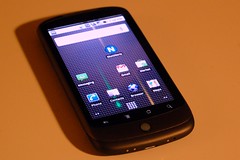
Maybe the Nexus One Wasn't Supposed to be a Hit

(19/365) Do I miss my iPhone? One week of Goog...Image by spieri_sf via Flickr

There has been quite bit of buzz about the Nexus One and its failure in the marketplace. Google's first branded smartphone has sold only 135,000 units, making it a bona fide flop. But I have to wonder if Google needed or even wanted it to succeed. While the Nexus One was Google's first smartphone, it was hardly a unique product. It was only one of a rather long and always growing line of Android handsets being built by a wide variety of cell phone vendors. In fact, I distinctly recall a lot of grumbling that with the Nexus One, Google was going to be competing directly with its own customers, the companies which had licensed the Android operating system.

And this makes the "failure" of the Nexus One fairly convenient for Google and for its licensees. Now Google can reassure its licensees, "See guys, we're not taking away sales from you!" But despite the lackluster sales, the Nexus One did raise the bar putting powerful hardware into an attractive package which handset makers still have to match. And this was likely the point of the Nexus One all along to let competitors like The Droid get the sales while the Nexus One keeps them honest and nudges them in the direction that Google wants them to go. No more underpowered Android handsets.

This wouldn't be the first time that Google has done something like this, putting out a product that was designed more to nudge rivals than to actually succeed on its own. While Google Chrome is growing in popularity and is now the basis for an ambitious new operating system, Chrome's original purpose seemed to be to assure that Google apps like GMail would run really, really fast. As a result, Chrome was a very fast browser with no extensions, no themes, and other glaring flaws. If the history of Chrome is any indication, I doubt if anyone at Google is losing any sleep over the Nexus One's sales.
Reblog this post [with Zemanta]

Monday, March 15, 2010

'Til Death—Directionless and Less Than the Sum of its Parts

'Til Death originally started out as a fairly generic Everybody Loves Raymond type of sitcom that got by on Brad Garrett's energy and some occasional wackiness by the supporting cast. Fast forward to the present and Garrett's energy is gone, the wackiness level is through the roof, and the show has gone from an overachiever to and underachiever.


'Til Death is probably the most self-aware sitcom on television right now with Eddie's son in law Doug having developed a "mental condition" where he believes that he is on a TV sitcom. As a result, the show trots out every sitcom cliche in hopes that it will somehow be fresh because they are winking at it. The trouble is that TV shows have been breaking the fourth wall for decades; so when 'Til Death does it, the winking self-awareness doesn't feel fresh.

That's not to say that the show doesn't work hard to be inventive. I'm currently watching an episode where the cast is dreaming of Doug and Ally's wedding filmed entirely as a series of cartoons. But ultimately, it all feels like the writers are throwing darts at the wall hoping that something will stick. And right now, not enough is sticking.

While the over the top performances by almost the entire supporting cast do guarantee the occasional laugh, this show used to get more laughs without trying half as hard as they do now. This raises the question of what happened and I think that the answer is that they've essentially taken their star, Brad Garrett, and turned him into a straight man. It reminds me of the "What Up With That?" skit on Saturday Night Live which is an interview show where there are so many ridulous distractions with singing and dancing that the host never gets around to interviewing his guests. At this point in its existence, 'Til Death is a lot like that skit. There is so much over the top silliness that there is little room for anyone to be consistently funny.

Friday, March 5, 2010

Google Reinvents Graffiti

Google has added a new feature to Android which looks a lot like an old feature from another mobile OS. Palm's old PalmOS PDAs had stylus-based input system called "Graffiti" where you would enter characters based on set of predefined pen strokes. It worked very well for years until the emergence of smartphones required Palm and Handspring to adopt keyboards for their devices. Add a long lawsuit by Xerox and Graffiti disappeared into the mists of gadget history.

Sort of. The idea of Graffiti remains popular enough that there is even a version available for iPhones. So it was probably only a matter of time before someone tried to bring it to Google's Android OS. That someone turned out to be Google itself which recently released a Gesture Search application which allows you to run searches by simply drawing letters. This is essentially what you did with the old PalmOS Graffiti.

But Gesture Search is a single standalone application while Graffiti was an essential part of the PalmOS and could be used with every PalmOS application. In fact even after Palm abandoned having a dedicated Graffiti input area for its Treo phones, it was still possible to install an app which would allow you to enter Graffiti strokes directly on the phone's screen.

That has gotten me to think about webOS on my Palm Pre. While there is a virtual keyboard available for webOS, there is nothing like Graffiti or even Gesture Search available for webOS. And that's disappointing because after all, Palm was the company which made this sort of input work in the first place.

And I think that Palm is uniquely suited to make it work again. Palm already has the code to Graffiti and Graffiti II—the successor to Graffiti which Palm introduced in part because of the Xerox lawsuit. And Palm has a its dashboard notification system which would be a convenient place to keep the controls for a Graffiti-style input system. So there really is no reason why Palm couldn't create another version of Graffiti and have it work on the entire operating system.

I used Graffiti for years on Palm PDAs. And I've used smartphone keyboards for years. But I was never really able to get used to using virtual keyboards which is one reason why I never got an iPhone. Now if I could have Palm's old Graffiti writing system back and have it live in my Palm Pre's dashboard, that would be a great alternative to sliding open my Pre when I only have to enter one or two characters.

Official Google Mobile Blog: Search your Android phone with written gestures

Saturday, February 20, 2010

Rogue Antispyware

The Internet is full of websites where they tell you what software you should be running but how many places are there that tell you what you what not to run. Well here's one that I encountered on Usenet: Rogue Antispyware, your guide to rogue security software that you should not not have on your computer.

Photobucket

Tuesday, February 16, 2010

Phone Angst

People have been obsessing over their phones for a while now but I think that Palm may be taking it to a new level with webOS on its Pre and Pixi phones. Since Palm has committed to a regular upgrade schedule for webOS with big updates coming once a month along with minor updates in between the big ones. All told Palm has put out nine updates for webOS since June 2009 and buzz for the tenth update, webOS 1.4, is growing among its users.

Part of it is just the newness of the platform. Google's Android has been around for well over a year. Apple's iPhone has been around for three years. Palm's webOS has been around for just eight months and is still very much a work in progress. webOS 1.4 is expected to bring among other things support for video recording, a feature which the iPhone and Android phones have had for some time.

But I think that an essential part of all the phone angst that webOS is generating among its users is that Palm has always generated a strange dichotomy of feelings among its user community. The loyalty of the Apple user community is legendary and with the iPhone it has only grown and reached ever more cult-like proportions. Microsoft has its fanboys too but mostly its users tend to show more of a grudging acceptance than actual love. With Palm, the feel of the user community is a lot more complicated. Loyalty tends to mix with anger over perceived wrongs and missed opportunities which make members the Palm user community like one half of a separated couple—still in love but distrustful and bracing for the worst.

My own phone angst is as much a result of the platform's newness as it is to the its rapid pace of development. I jumped on the Pre early on and I love to tweak the hell out of it using Homebrew patches which I load through Preware. And the Preware people have worked hard to keep up with the pace of webOS development. As result, I sometimes have to deal with days when I have to uninstall and reinstall almost all my patches. Today was one such day as the Preware folks in anticipation of webOS 1.4 updated their patches for compatibility with it. As result I found myself staring at a phone which needed to update over forty patches. Luckily the Preware developers have worked hard to make this process as painless as possible and I clicked the "Update All" button and Preware went to work:

Photobucket

Arrrrgh!

I decide to try the "Emergency Patch Recovery" (EPR) utility. This program has been useful to me in the past by allowing me to wipe out all of my phone's patches in one feel swoop rather than having to uninstall them one by one. But first I have to uninstall my phone's theme and do a Luna Restart (a quick restart that Preware can do when you don't need to do complete reboot). So I fire up Preware again and suddenly it only has to update seventeen patches instead of forty. Hmmm, that's new. So I hold off on running EPR and hit the "Update All" button again. So I close Preware and start it again. Now only nine patches need updating. So I hit the "Update All" button yet again. And this time Preware goes through the process without a hitch.

So all's well that ends well. I find a theme that I like, install it, and do a full reboot of my phone so all the updated patches can take effect. The surprising thing was that I did all this over the course of a couple of hours as I was going about my day. Except for the Java restart and the reboot at the end, my Pre remained in use doing other things while I had Preware churning away in the background (Preware takes a long time to load its list of applications and to do updates). It wasn't perfect but it was a much smoother process than what I've experienced in the past with having to update patches one by one. So my phone angst is a little lower at the end of this day...

...and that's a good thing because I'm going to have to do this all over again later this week or the next week when webOS 1.4 comes out.

Friday, December 25, 2009

Avatar—Dances With Wolves Meets 2001: A Space Oddessey

Warning: This review will contain significant spoilers for the movie Avatar. Do not read it if you don't want to be spoiled.

On a purely mercenary level, James Cameron's new movie, Avatar is the perfect movie for every demographic. A visually stunning film created with 3D digital technology which didn't even exist a few years ago, Avatar is equal parts Sci-fi, fantasy, action, adventure, and cowboys versus indians space western. There's even a romantic subplot thrown in to appeal to the "chick flick" crowd. While the story is simple on the surface, there also appears to be plenty of room for a very complicated back story.

The comparisons with Dances With Wolves and this film are inevitable. A military man makes contact with the natives and works to earn their respect. He goes native at about the same time that his own people arrive—basically our own western civilization—to play the bad guys. While a lot of people might complain that this is a simplistic movie–and it is—the people who like it, including myself, simply don't care that it's core message can be boiled down to "white people bad, blue people good." There are plenty of crappy movies out there with complicated plots and I'm glad to report that from my perspective, Avatar is neither the former nor the latter.

The movie revolves around a crippled marine named "Jake Sully" who must take the place of his dead twin brother in an ambitious program in which scientists explore an alien moon called "Pandora" by interfacing directly with genetically engineered alien bodies called "avatars." They do this in order to communicate with the planets natives, a race of ten-foot tall blue humanoids called "the Navi." The scientists are working against time as the Navi's "Hometree" is right on top of a mineral called "unobtanium" which a greedy company wants to mine. And that company has plenty of stereotypical marines in its employ who are ready to kill the Navi. Sully initially cooperates with his fellow marines, giving them a run down of the strengths and weaknesses of the Navi stronghold even as he works to gain their trust. Ultimately Sully falls in love with the Navi culture—and with a Navi warrior woman.

Naturally, Colonel Quaritch who is in command of the mission decides that the time has come to show the Navi who's boss—in one particularly effective scene the colonel uses Sully's own videolog to justify cracking down on the Navi. Sully tries to warn the Navi but finds himself rejected by his new people instead. Colonel Quaritch orders an attack on the Navi Hometree which is essentially a reverse 9/11. The heart of the alien culture is destroyed in a single unprovoked attack that echoes the destruction of the twin towers of the World Trade Center by terrorists on September 11, 2001—only this time we're the terrorists and the aliens are the victims.

This isn't the first time we've seen 9/11 echoed in sci-fi. Battlestar Galactica used the Cylon destruction of the human colonies as a metaphor for the 9/11 attacks as well but Avatar is the first time that I've seen this metaphor employed in reverse, as an indictment of our own culture and echoing the destruction of American Indian culture by our own western culture. It's a fairly potent symbol and it really is the only way we can really justify what happens next. Sully turns against his fellow marines and teams up with a hand full of scientists and a renegade marine pilot (played by Michelle Rodriguez who supplies the fairly compelling scene of a beautiful woman in war paint flying a hovercraft into battle against her fellow marines) to lead the Navi as they fight back against the marines.

The Navi retreat to the "Tree of Souls" which is essentially the nerve center of Pandora, a tree which connects all life on this moon into one giant neural network, Quaritch is convinced that the Navi will be broken if the Tree of Souls is destroyed and makes it the next target in his "Shock and Awe"—yes, they actually say that in the movie, Cameron's bluntness as a story teller is his greatest weakness but his movies are so well crafted and so action filled that it is rarely an issue. It's not an issue for me here as the movie is so spectacular and so immersive that it is almost impossible to get pulled out of it.

Sully convinces the Navi to gather all of their tribes to make a stand at the Tree of Souls which ends in a fairly predictable but nevertheless stunning fashion. The evil humans are defeated and banished from Pandora and the Navi gather at the Tree of Souls to download Sully's consciousness into his avatar body. His human body dies and Sully is fully alien now. It's a piece of wish fulfillment which reminds me of the end of Inglourious Basterds where World War II is won in Europe not by a hard long slog through German held lands which kills millions but by blowing up Hitler and the entire German high command real good. Given that this is a sci-fi fantasy movie, it's hard to argue with the film makers' decision.

But I think that there is something else going on besides a extremely well made science fiction, fantasy, and special effects. I can't for the life of me imagine how an ecosystem like the one we see on Pandora can just naturally evolve. While it is fairly common for sci-fi film makers to ignore the laws of science when they interfere with their paper-thin plots, I don't think that this is what is going on here.

Pandora is basically a giant neural network where every living thing is so tightly integrated with rest of the planet that even the fiercest of the woodland animals know to attack the marines when the Navi are almost overwhelmed by the onslaught of the marines attacking with their superior technology. This neural network is so sophisticated that it is actually possible for the Navi to download Sully's mind directly into his avatar body at the end of the movie. This download is actually attempted twice in the movie—a human scientist, Dr. Grace Augustine who is played by Sigourney Weaver, is shot and the Navi attempt to download her mind into her avatar body. This attempt fails because she's too badly injured but before the final confrontation with the marines, Sully prays to "Eywa," the Navi deity to look into Dr. Augustine thoughts and to help them defeat the humans.

The Navi even bond to their animals by connecting a long braid of hair which unravels to reveal tiny tentacles which connect to tentacles on a similar braid which is attached to these animals. It reminds me of an organic version of the human/machine interfaces you see in movies like The Matrix. There is a scientific idea called "The Gaia Hypothesis" which suggests that all life is connected and cooperates to keep Earth livable which on the surface does resemble what we see in Avatar with all of Pandora's life being linked together. But in this movie Ewya is described in a manner which reminds me more of the way that the Force described the early Star Wars movies (before George Lucas ruined the concept in the prequels with technobabble about "midichlorians").

On the surface, Avatar is expressing a very anti-technology viewpoint—love Mother Earth (or in this case "Mother Pandora"), don't destroy her with your technology. This is a fairly common theme in James Cameron's movies; but there is a deeper, more subtle theme here which is never expressed—probably because it would be boring and James Cameron doesn't do boring. Just like John Connor cannot survive to lead the human resistance against Skynet without a Terminator acting as his bodyguard, so the Navi cannot defeat the humans without the interference of Eywa. Could it be that Eywa is just a non-evil organic version of Skynet? Is Eywa an incredibly powerful supercomputer which can be accessed by the Navi?

I think that this is as good as any theory on the "science" of Avatar. It would certainly explain gravitational "flux" which wreaks havoc with the human electronic equipment and which allows the gravity defying Hallelujah Mountains which float in the air with seemingly nothing save for this mysterious flux to hold them up. If some intelligent species evolved on a world where the gravitational and magnetic fields were so screwy that an entire mountain could just hang in mid-air, it might make it hard for them to develop human-style electronics. Any technology that such a species might develop would likely be organic. It's not a huge leap to imagine that some cataclysm—like say, a self-aware organic computer wiping out the existing civilization—resetting all life on Pandora and allowing it to be remade in the image of an all-powerful artificial intelligence which directs its evolution until all that life is part of the giant self-aware computer which first paved the way for its creation. They might even give it a name and make it their deity. Intelligent design sci-fi style or more aptly in the words of Arthur C. Clarke, the author of 2001: A Space Oddyssey, "Any sufficiently advanced technology is indistinguishable from magic."

Wednesday, December 23, 2009

Hurry Up and Wait—Palm's Update Cycle Slows Down

Ever since Palm came out with its Pre phone, they have been updating its webOS operating system approximately once a month. Sometimes the updates have been small and sometimes they can introduce bugs. But even so, it was OK for me since there would usually be another update just around the corner. Now with their latest update which brought webOS to version 1.3.1, the update cycle has apparently slowed down. webOS 1.3.1 came out in mid-November and now we are nearing the new year with precious little word of another update. While normally a delay in updating webOS might not be a problem for me but webOS 1.3.1 has unfortunately introduced a rather serious bug which causes Motionapps' Classic emulator to be very unstable. Worse yet, just running Classic now can leave my Pre so sluggish that I have to reboot it both before and after using this program. And just to add insult to injury, apparently Motionapps has already fixed this bug but can't release the fix until Palm does its next update.

A perfect storm of incompetence. Suddenly the new Palm is starting to look a lot like the old Palm.

Classic Crash